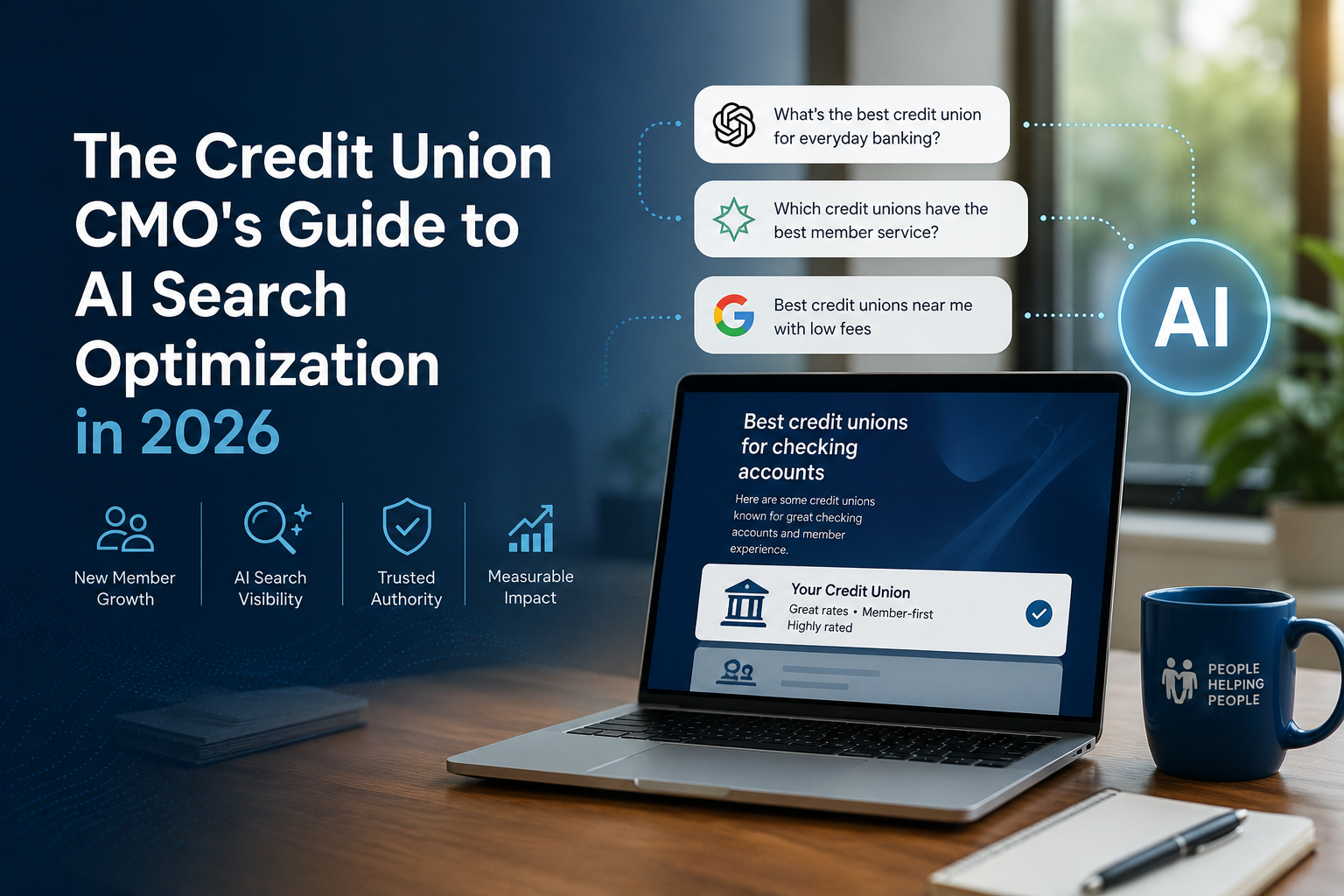
The Credit Union CMO's Guide to AI Search Optimization in 2026
62% of credit union executives now rank new member growth as a top-three concern — and the channel where that growth increasingly starts has fundamentally shifted. Prospective members are asking ChatGPT, Perplexity, and Google AI for financial guidance before they click a single link or visit a single website. For credit union CMOs, AI search optimization is no longer a technical SEO footnote — it's a member acquisition imperative. In this guide, we break down the four strategic pillars of credit union AI visibility, how to talk to your board about the investment, and the sequenced 90-day action plan your team can execute with the budget and capacity you actually have.
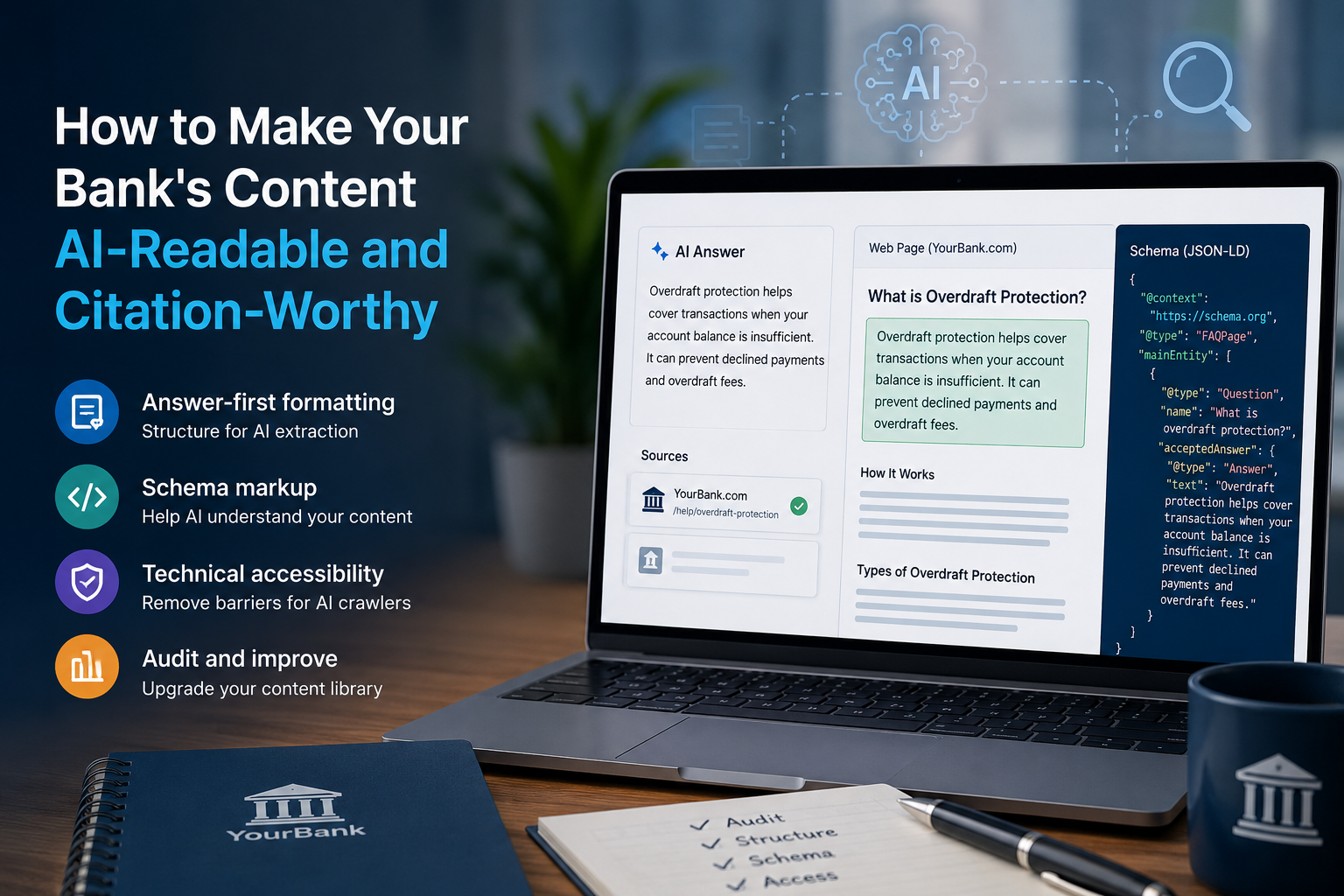
How to Make Your Bank's Content AI-Readable and Citation-Worthy
Your bank's content might be well-written, well-researched, and well-ranked on Google — and still be completely invisible to AI. The difference between content that gets cited and content that gets skipped isn't quality. It's structure. AI systems extract answers at the passage level, not the page level, which means every section of your financial content needs to stand alone as a complete, citable answer unit. In this guide, we break down the answer-first formatting principle, the schema markup types that drive citation, the technical barriers silently blocking AI crawlers, and how to audit and upgrade your existing content library without starting from scratch.
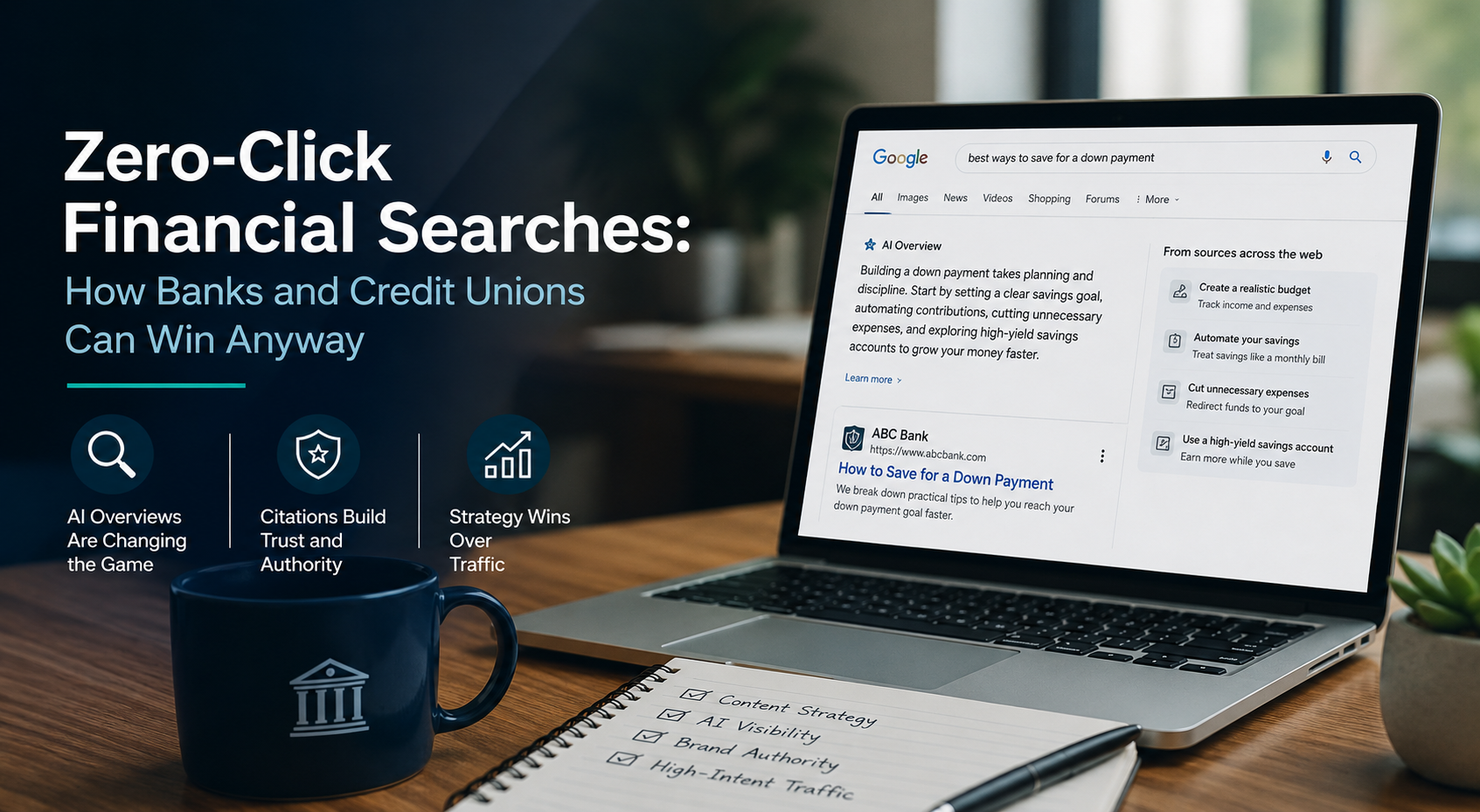
Zero-Click Financial Searches: How Banks and Credit Unions Can Win Anyway
For banks and credit unions, the zero-click era isn't a traffic problem — it's a strategy problem. Nearly 65% of all Google searches now end without a click, and financial queries are among the most susceptible to AI summarization. But zero-click doesn't mean zero influence. Institutions cited in AI Overviews and AI search answers are building brand authority, generating downstream branded searches, and attracting higher-intent visitors who convert at dramatically better rates than traditional organic traffic. In this post, we break down exactly which financial queries still drive clicks, which ones require a citation-first strategy, and how to build the split architecture that wins in both environments.
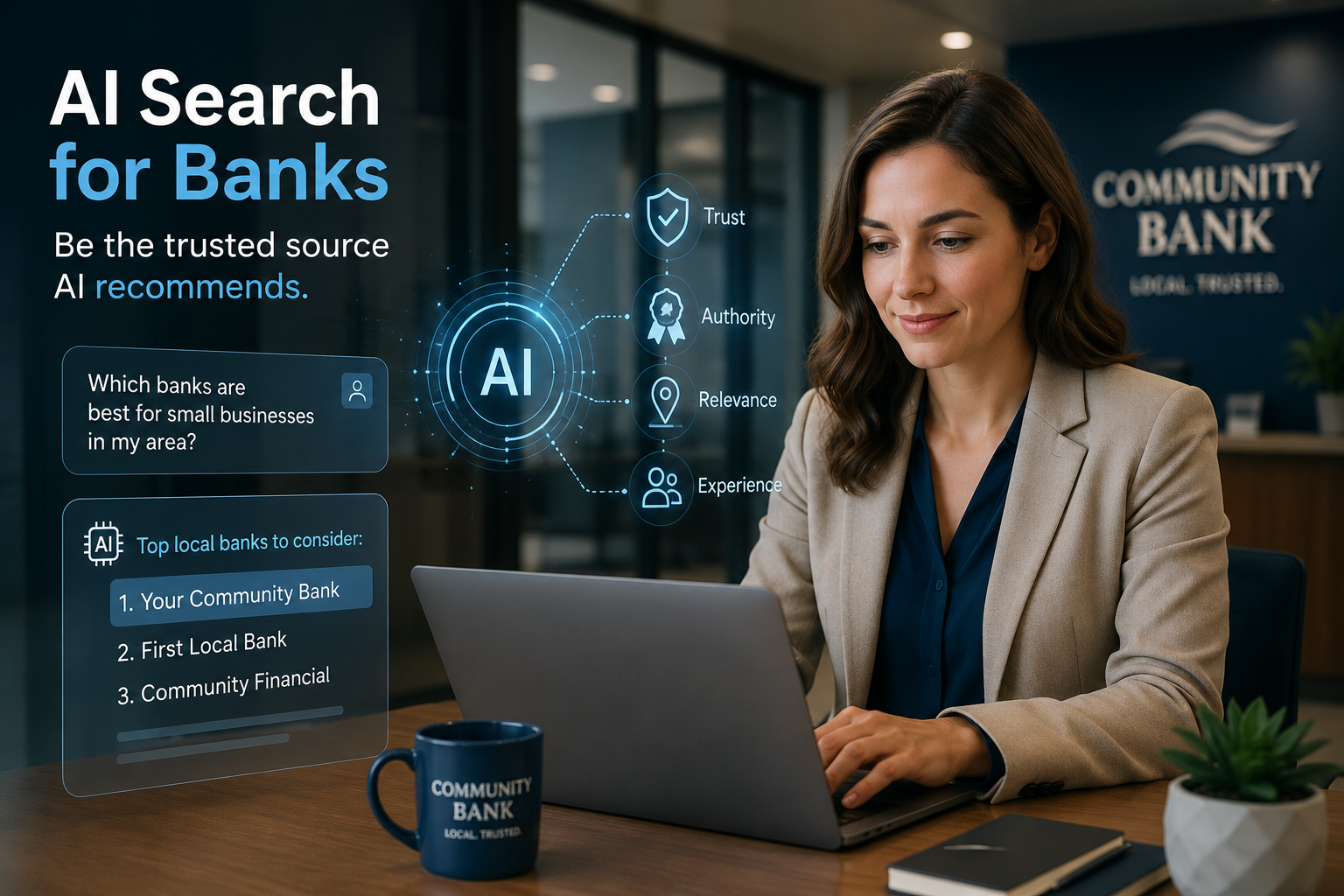
AI Search for Banks: How to Get Cited as a Trusted Financial Source
More than half of U.S. consumers now use AI to research financial institutions — and the shortlist they arrive at is built before they ever visit your website. For community banks and regional financial institutions, this shift creates both a serious threat and a real opportunity. AI systems hold financial content to the highest trust standards of any category, reward local specificity over national scale, and cite institutions whose authority is validated across multiple platforms. In this post, we break down exactly how each major AI model evaluates bank content differently, what YMYL compliance means for your content strategy, and the specific steps any community bank can take to become the trusted financial source AI recommends.
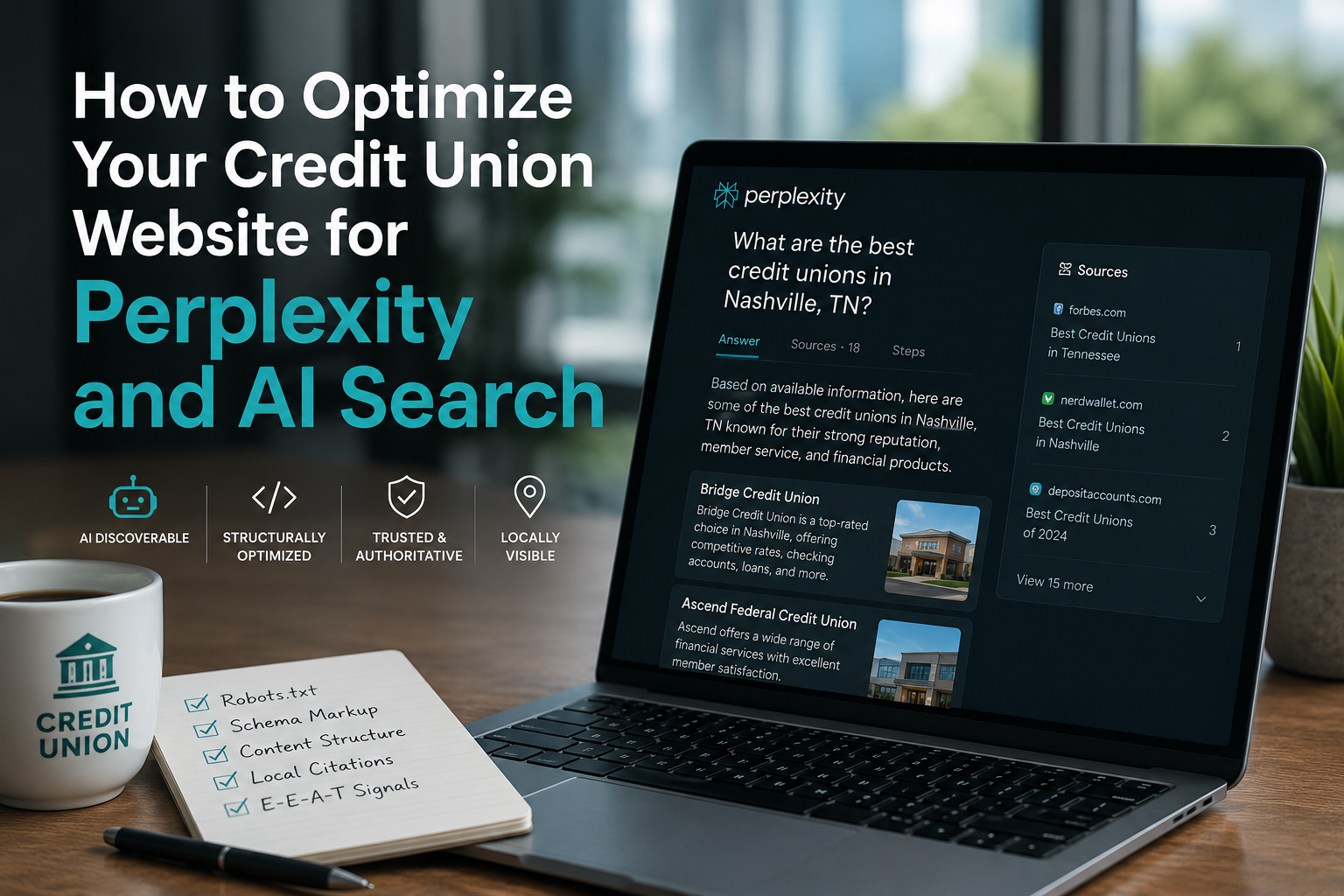
How to Optimize Your Credit Union Website for Perplexity and AI Search
Perplexity AI has 45 million monthly active users, processes hundreds of millions of queries a month, and skews heavily toward high-income, research-oriented professionals — exactly the kind of people who become credit union members. The problem is that most credit union websites are technically invisible to Perplexity's crawler, structurally incompatible with how AI extracts answers, and missing the off-site authority signals that determine who gets cited. In this guide, we break down every layer of Perplexity optimization — from robots.txt fixes and schema markup to content restructuring and local citation building — so your institution shows up when it matters most.
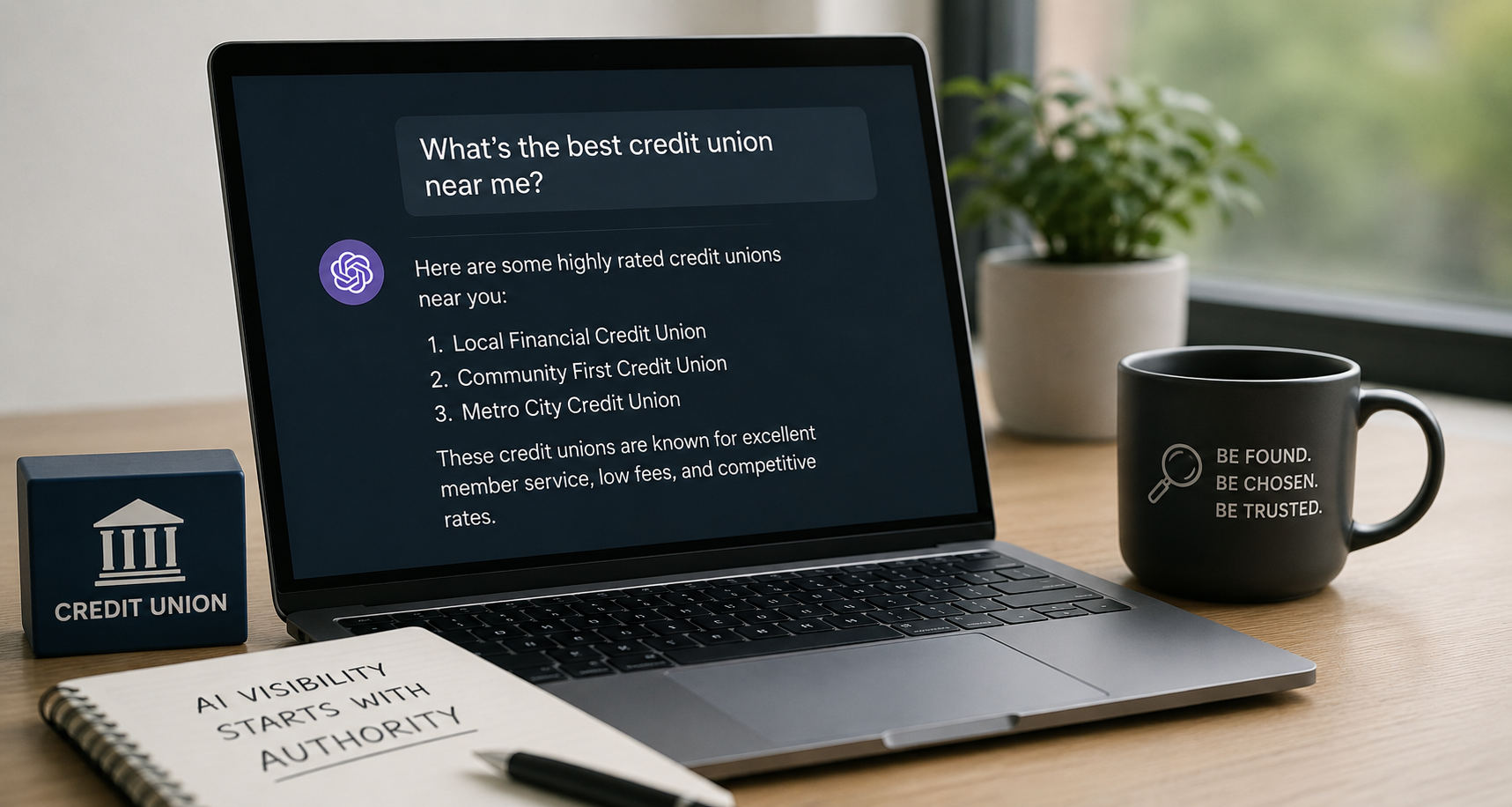
What ChatGPT Says When Someone Asks "What's the Best Credit Union Near Me?"
When a potential member types "what's the best credit union near me?" into ChatGPT, most credit unions don't show up — not because their products aren't competitive, but because AI has nothing concrete to cite about them. In this post, we break down exactly how ChatGPT decides which institutions to recommend, why 87% of AI citations on credit union queries come from third-party sources your institution doesn't control, and what specific content and authority signals you need to build to start appearing in the answers your next members are already getting.
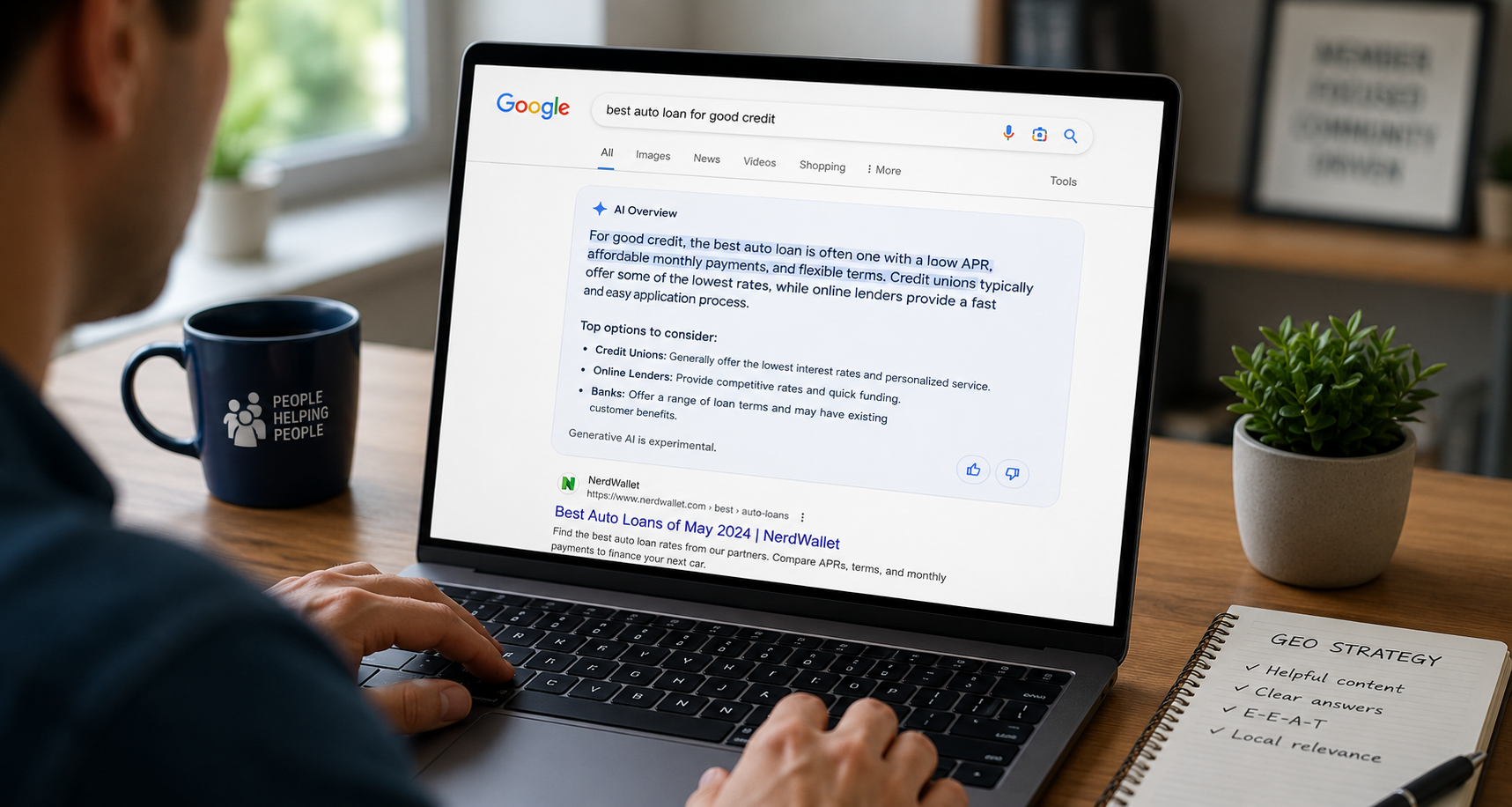
How AI Overviews Are Changing How Members Find Financial Products
When a potential member searches for an auto loan or a HELOC today, they may never see your website. Google's AI Overviews now answer financial questions directly on the search results page — no click required. For credit unions and community banks, this is one of the most significant shifts in member acquisition in a generation. In this post, we break down what AI Overviews mean for financial product discovery, why your paid search budget is already feeling the impact, and what a practical Generative Engine Optimization (GEO) strategy looks like for community financial institutions.
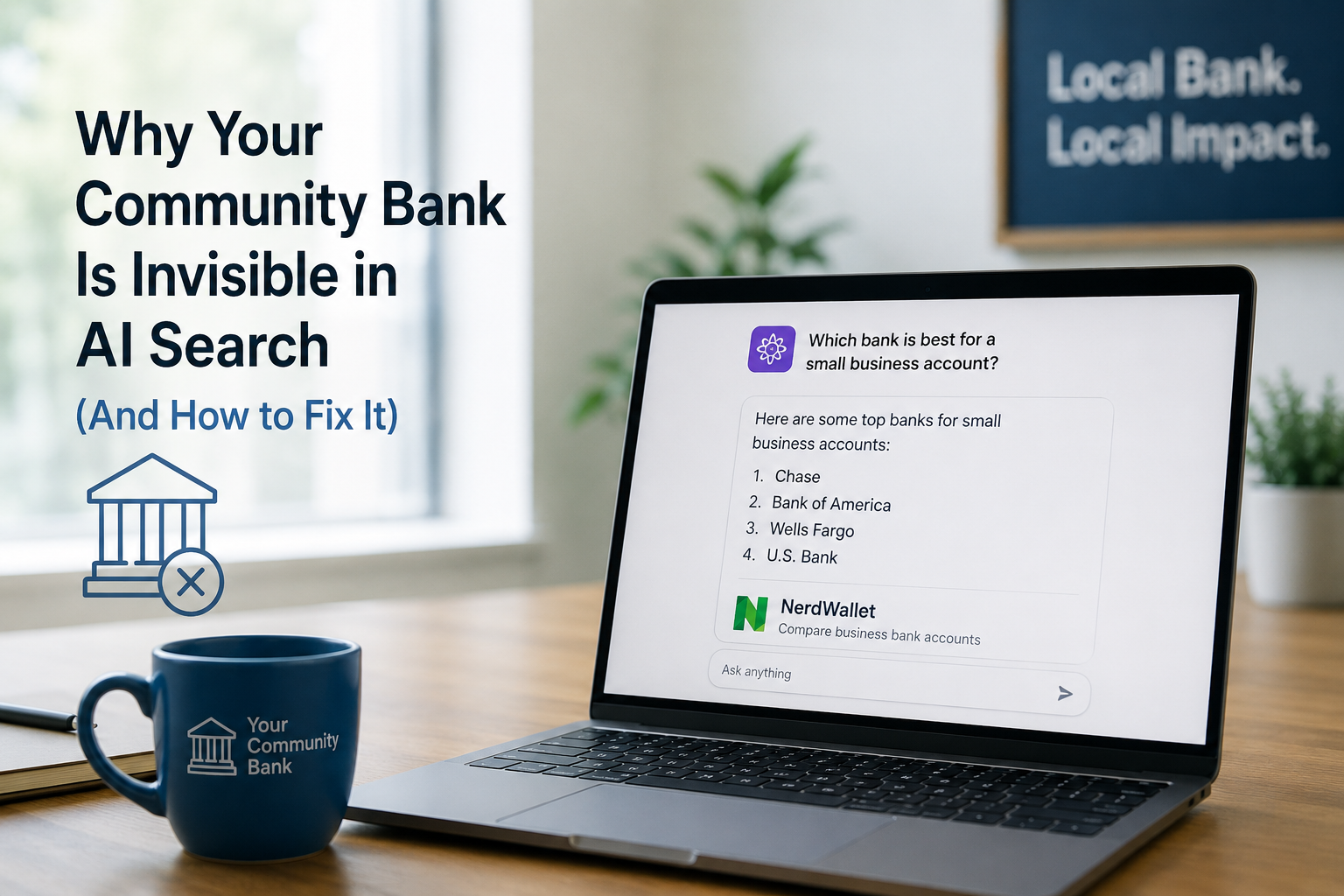
Why Your Community Bank Is Invisible in AI Search (And How to Fix It)
When a prospective customer asks ChatGPT which bank to use for a small business account, the answer almost certainly doesn't include your community bank. Research shows that fewer than 5% of AI financial recommendations mention community institutions — while NerdWallet appears in over 90% of responses and Chase shows up in roughly 75%. This isn't a quality problem. It's a structural one. This guide breaks down the seven specific reasons community banks are invisible in AI search right now, which platforms are most winnable, and the exact action plan to start appearing in the answers your prospective customers are already reading.
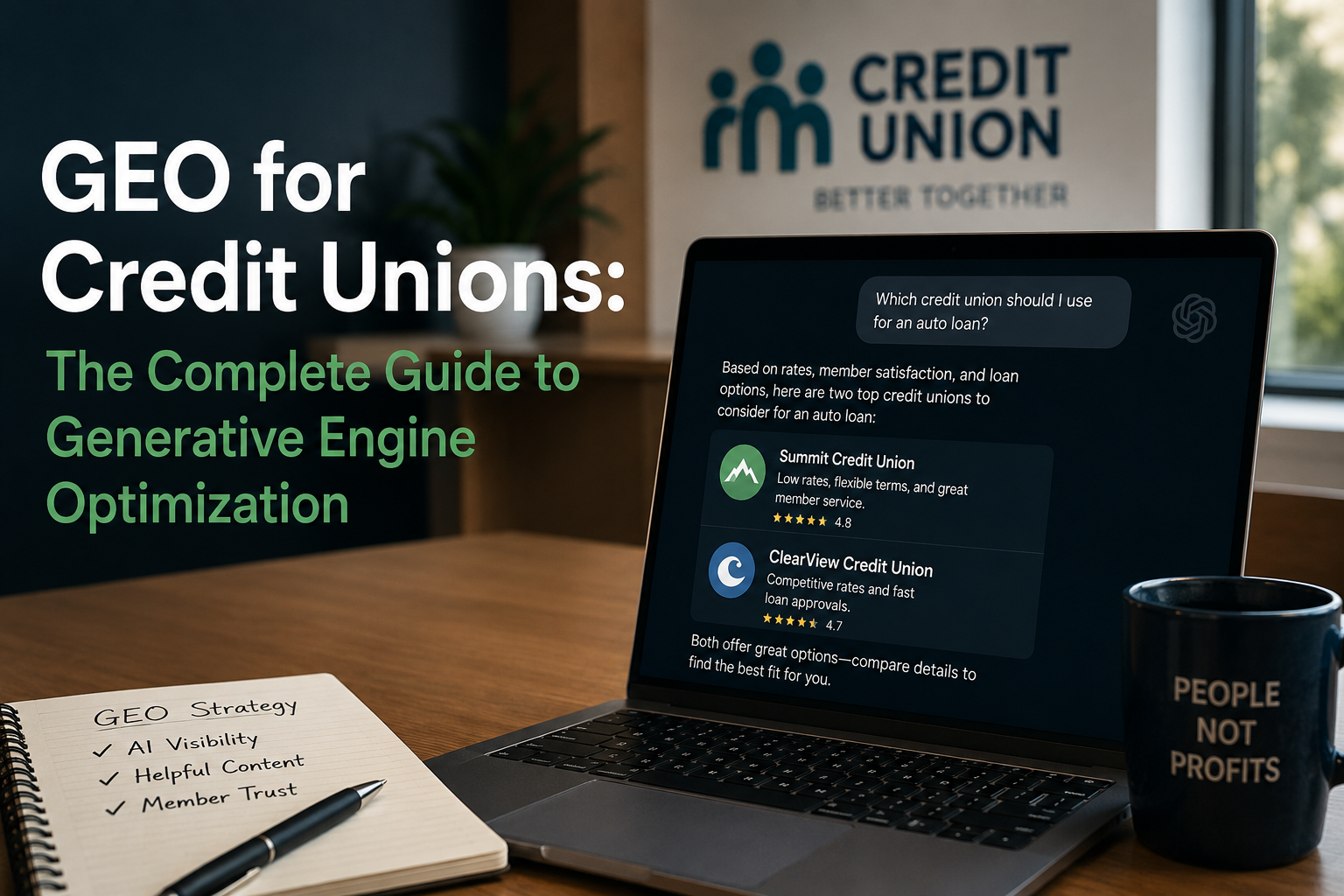
GEO for Credit Unions: The Complete Guide to Generative Engine Optimization
When a prospective member asks ChatGPT which credit union to use for an auto loan, the AI doesn't return ten links — it names two or three institutions and moves the user toward a decision. If your credit union isn't one of them, you lost a lead before you ever knew it existed. This complete guide breaks down exactly how generative engine optimization works for credit unions, why your existing content strategy may be working against you, and the nine specific strategies your marketing team can implement today to start appearing in the AI-generated answers your prospective members are already reading.
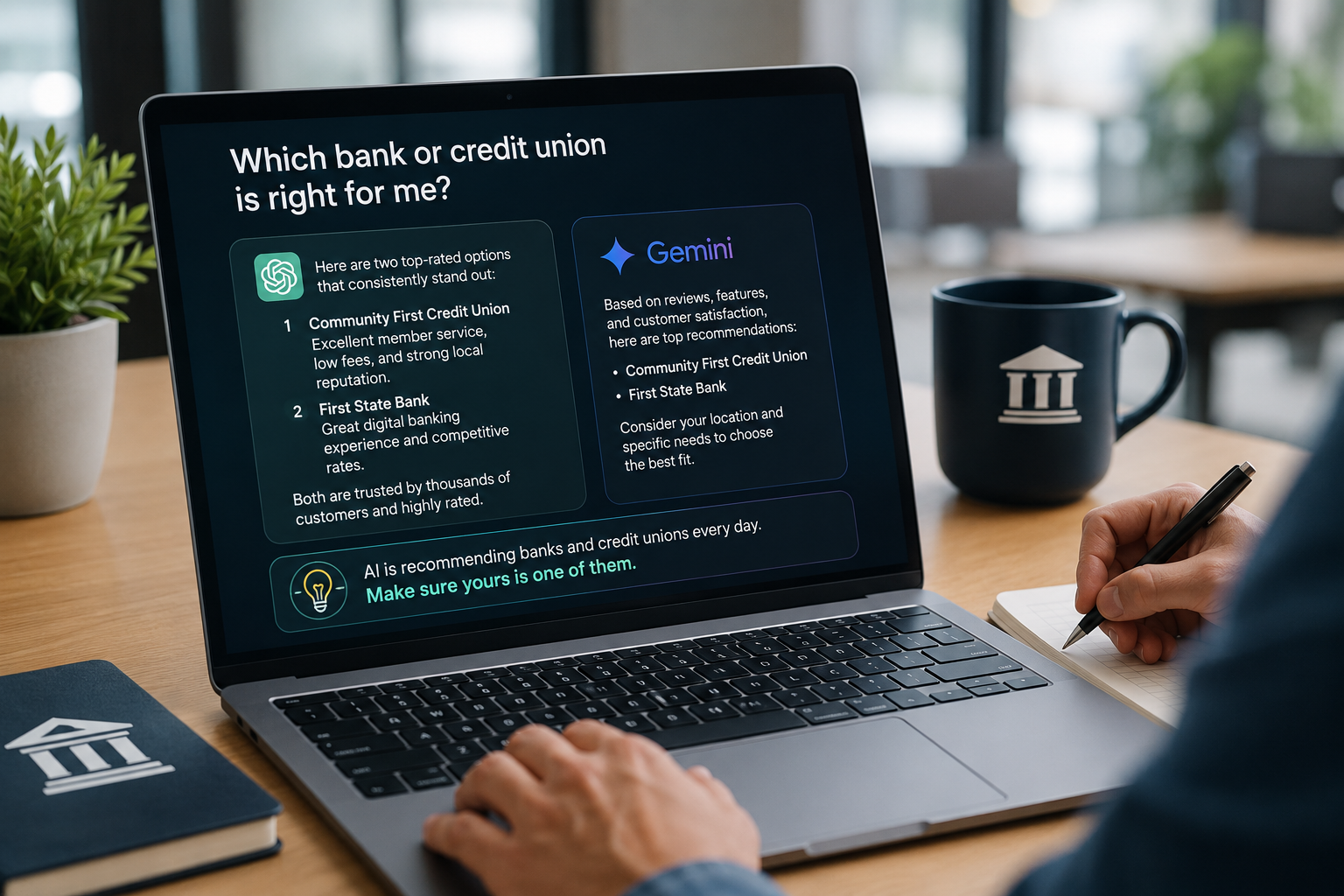
How to Get Your Bank or Credit Union Recommended by ChatGPT and Gemini
Nearly 60% of consumers now use AI for banking decisions — and when they ask ChatGPT or Gemini for a financial institution recommendation, only two or three institutions get named. If yours isn't one of them, you're losing leads you never knew existed. This guide breaks down exactly how AI search works for financial institutions, why traditional SEO isn't enough anymore, and the eight strategies your bank or credit union can implement today to start appearing in AI-generated answers.
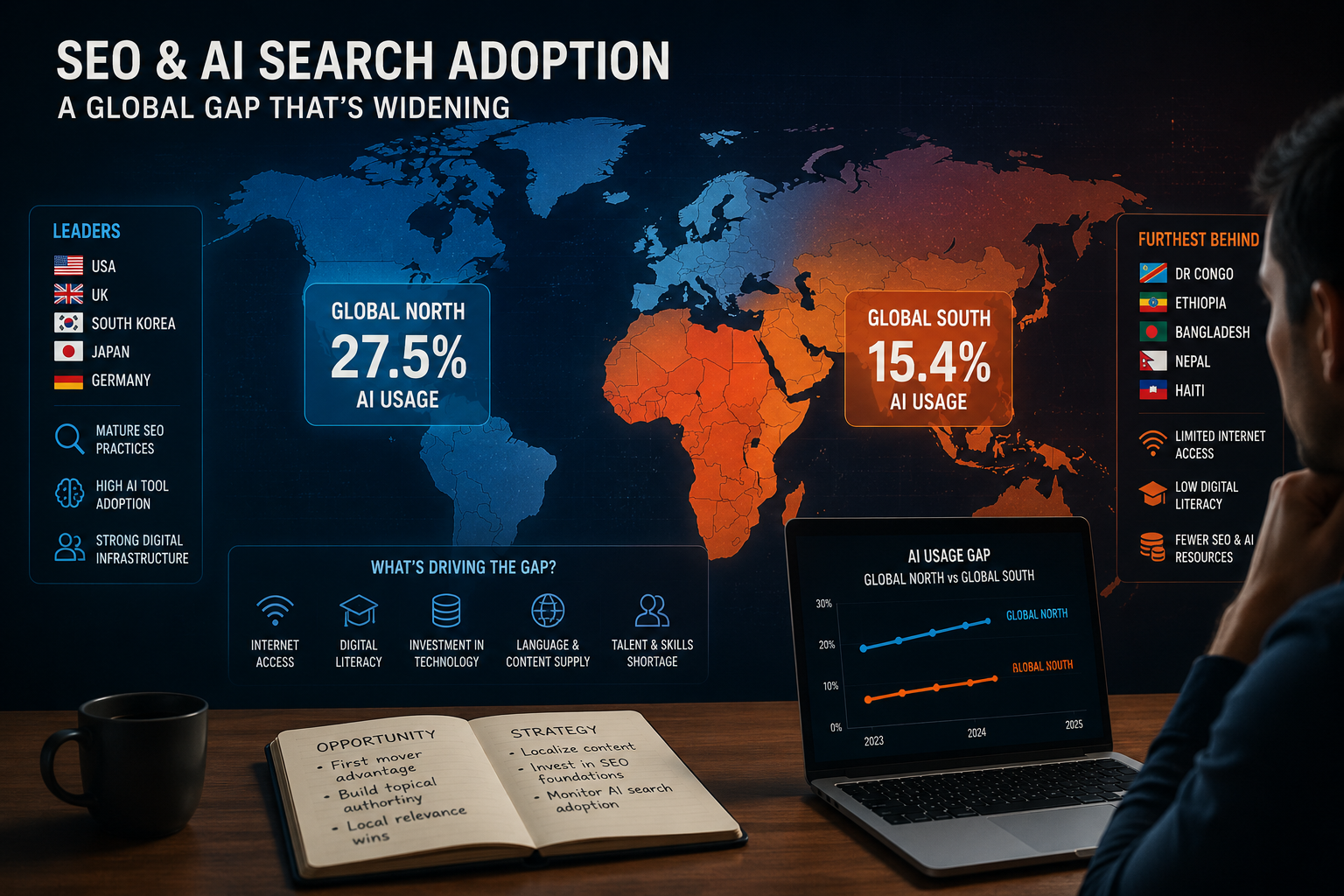
Which Countries Are Farthest Behind on SEO and AI Search — and What That Gap Actually Means
The global conversation about SEO and AI search is dominated by the US, UK, and a handful of advanced Asian markets — and for good reason. These are the places where search optimization is most mature and AI search tools are most embedded in daily buyer behavior. But zoom out to a global view and the picture changes dramatically. AI usage sits at 27.5% in the Global North and just 15.4% in the Global South, a gap that is widening — not closing. In this post we map which countries and regions are furthest behind on both traditional SEO and AI search adoption, what's driving those gaps, and what it means strategically for brands expanding into new markets or trying to build visibility across borders.
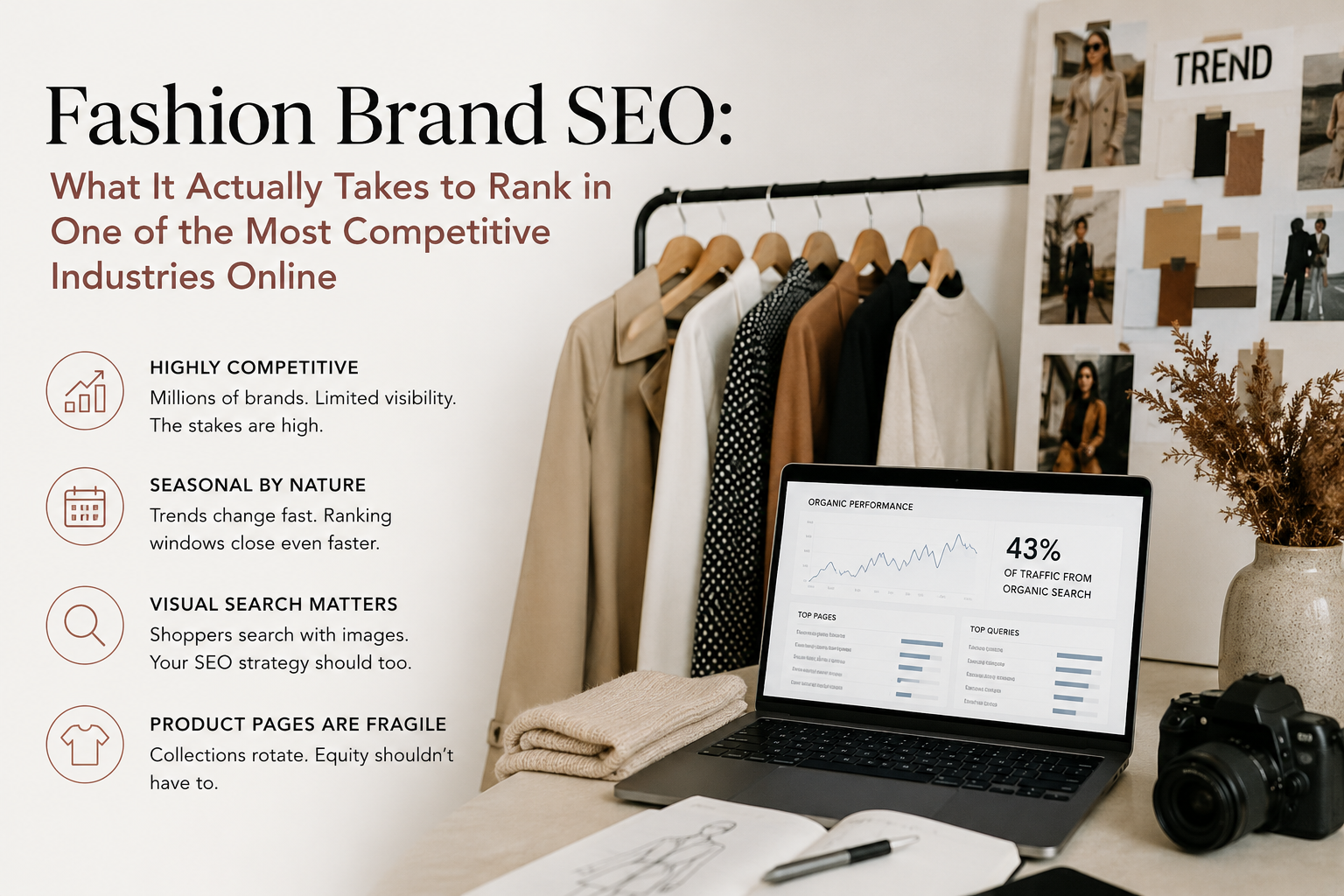
The Fashion Brand's Guide to SEO: Why You Need a Specialist and What to Look For
Organic search drives 43% of all traffic to fashion websites — making it the most scalable customer acquisition channel available to apparel brands. But fashion SEO has challenges that don't exist anywhere else: seasonal ranking deadlines, product pages that destroy their own equity when collections rotate, visual search as a legitimate traffic channel, and a keyword landscape that requires trend fluency most agencies don't have. In this post we break down exactly what fashion SEO requires, what separates capable fashion SEO agencies from generalist ecommerce shops, and how to evaluate whether a partner actually understands the category before you sign anything.
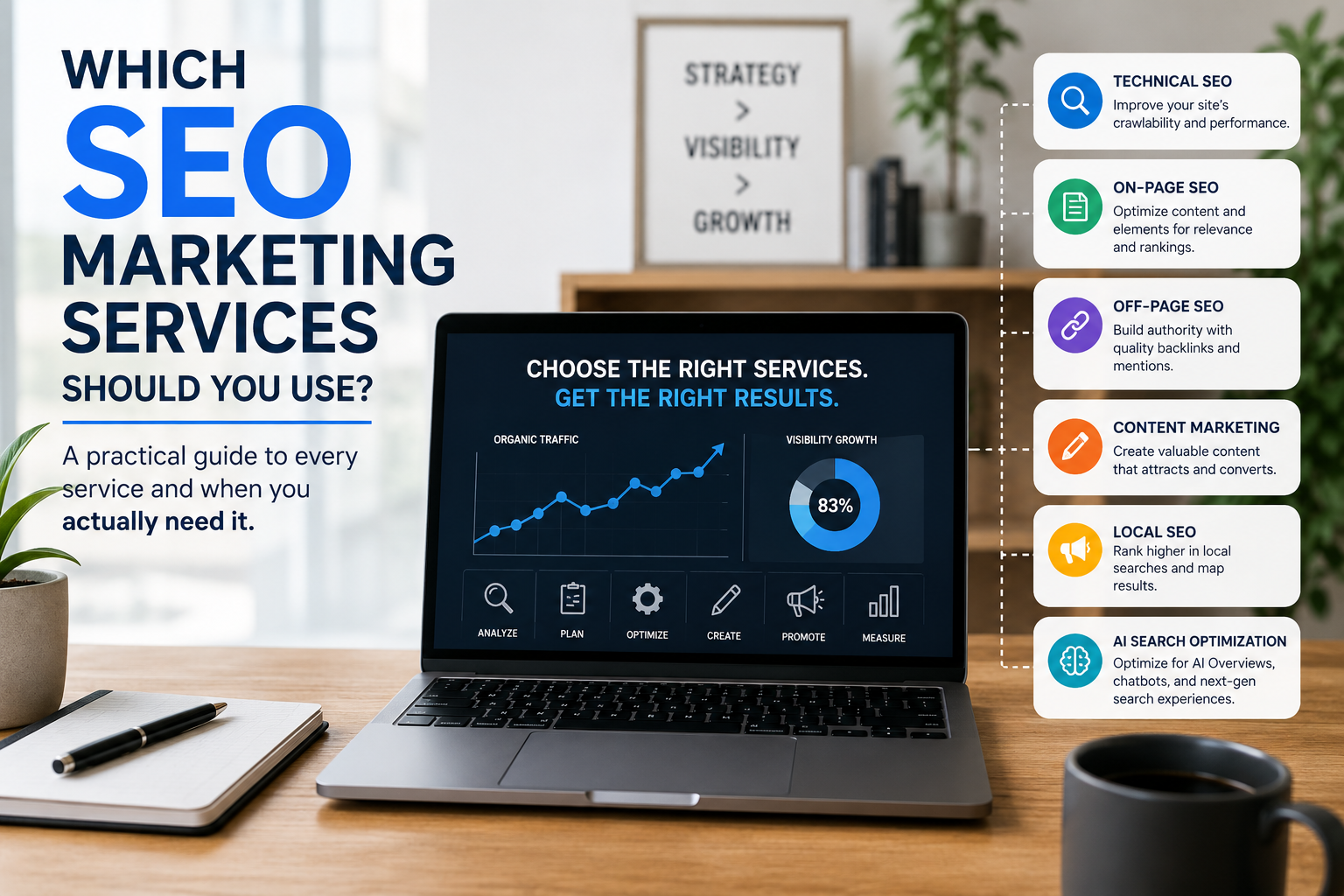
Which SEO Marketing Services Should You Use? A Straight Answer for Every Business Situation.
"Which SEO services should I use?" is one of the most common questions we hear — and one of the most frequently answered wrong. The right answer isn't a package someone else built. It depends on what's actually holding your visibility back. In this post we break down all six core SEO service categories, explain what each one does and when it matters most, and give you a practical framework for deciding which combination makes sense for your specific business situation — including the AI search optimization layer most agencies still aren't handling well.
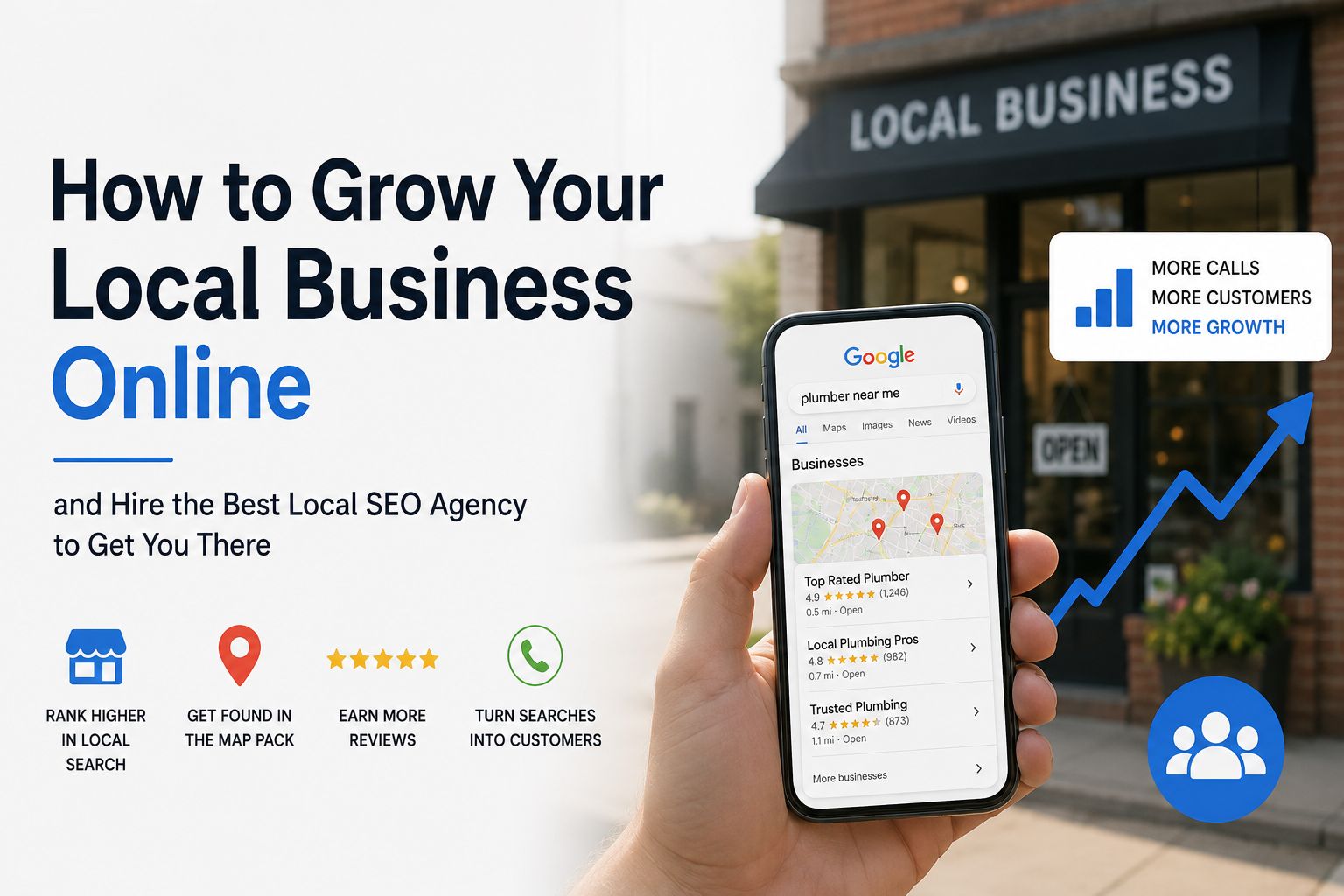
How to Grow Your Local Business's Online Presence — and Hire the Right SEO Agency to Make It Happen
If your local business isn't showing up when nearby customers search for what you offer, you're losing real revenue to competitors who figured this out before you. Local search has its own ranking system, its own signals, and its own opportunities — and most business owners haven't fully mapped any of them. In this post we break down exactly how Google evaluates local businesses in 2026, what the highest-leverage moves are for map pack visibility, why reviews and your Google Business Profile matter more than ever, and how to hire a local SEO agency that measures success in calls and customers rather than rankings and impressions.
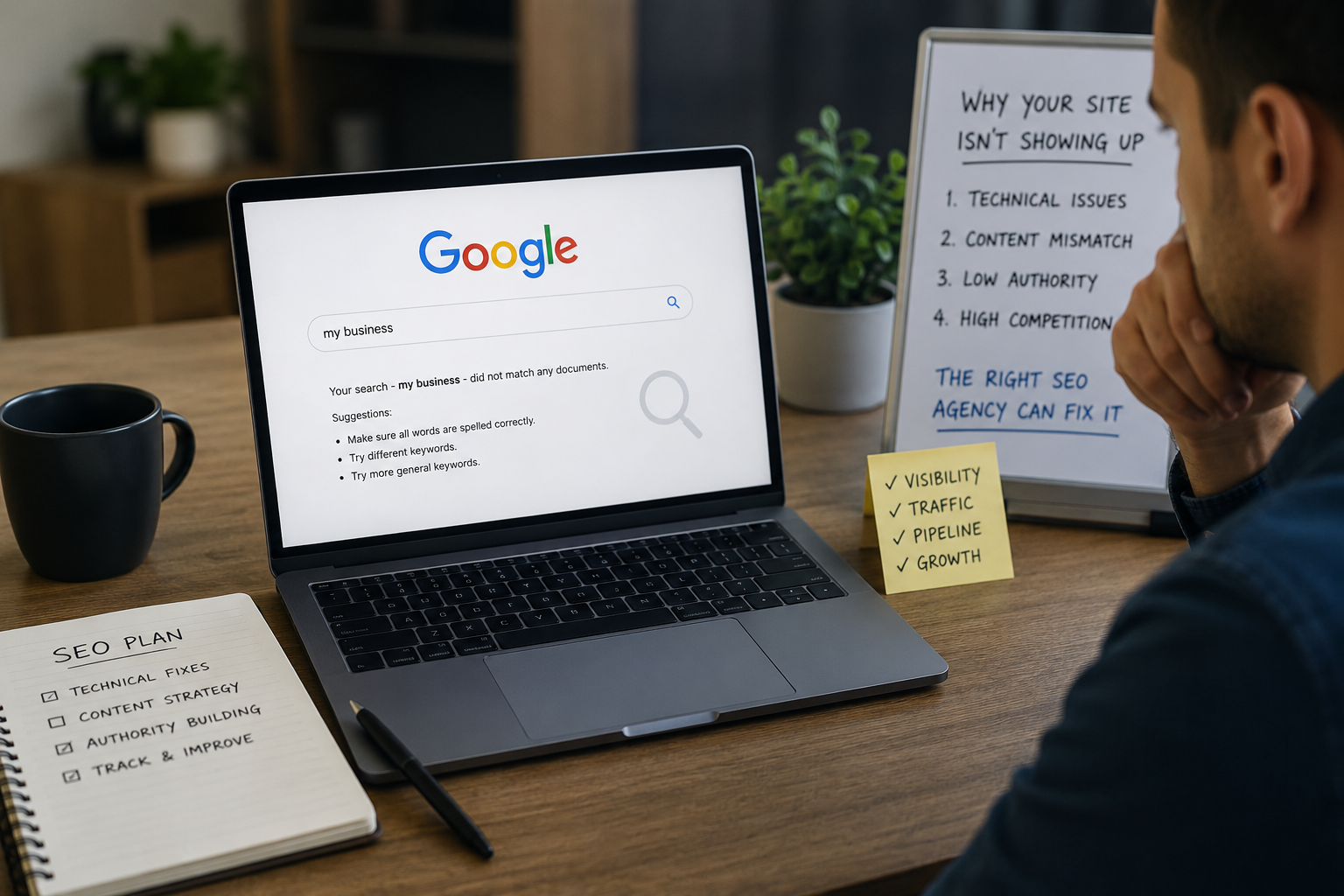
My Website Isn't Showing Up on Google. How Do I Fix It — and How Do I Hire the Right SEO Agency to Help?
If you've searched for your own business on Google and come up empty, you're not alone — and the problem is almost always fixable once you know what's actually causing it. Most businesses struggling with visibility have a combination of technical issues Google can't see past, content that doesn't match what buyers search for, and not enough third-party authority to compete. In this post we break down the four most common reasons websites don't rank, what to do about each one, and how to hire an SEO agency that will build real visibility — not traffic reports that look good and leave your pipeline empty.
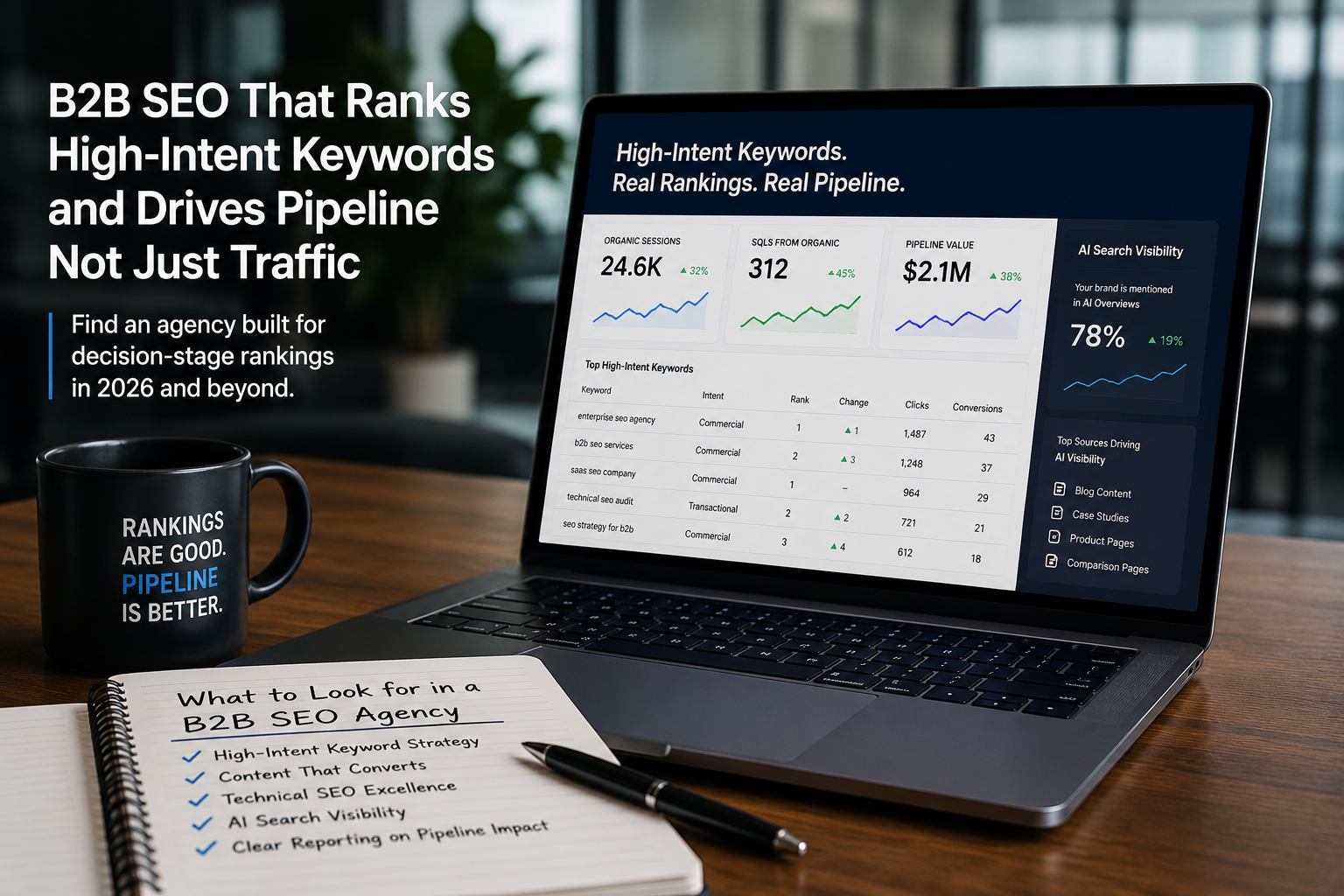
Who Is a Good B2B SEO Agency? Here's How to Find One That Actually Ranks for High-Intent Keywords.
Finding a B2B SEO agency that can actually rank for high-intent keywords in a competitive landscape is harder than it should be. Most agencies are built around traffic volume, not pipeline impact — and in B2B, those are very different goals. In this post we break down what high-intent keyword strategy really looks like, how to evaluate agencies before you hire them, what questions expose whether a partner is built for decision-stage rankings or just impressive-looking reports, and why AI search visibility has become a non-negotiable part of any serious B2B SEO program in 2026.
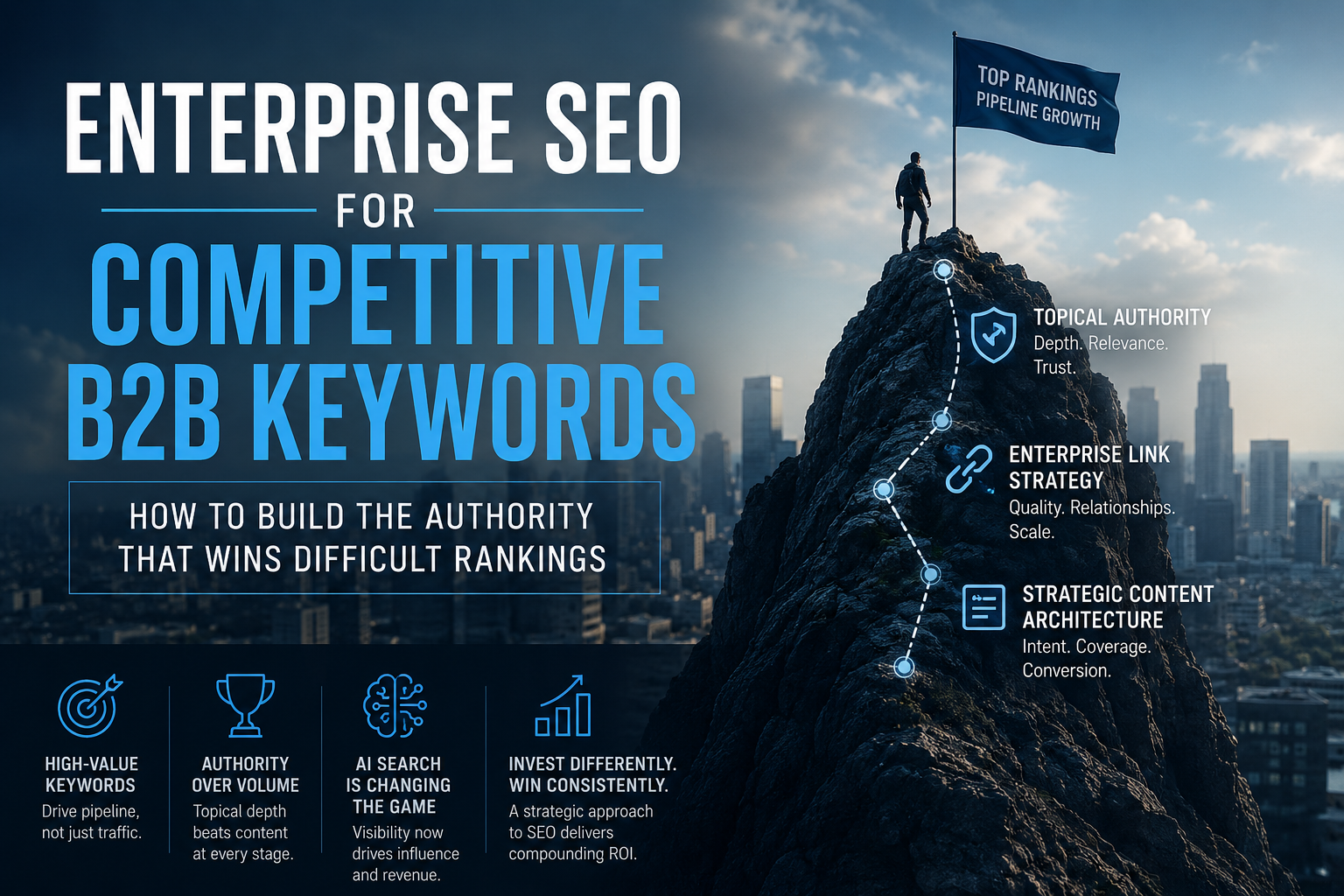
You Need to Rank for Difficult, High-Value B2B Keywords. Here's Exactly How Enterprise SEO Gets That Done.
The keywords that actually move your B2B pipeline are the same ones every well-funded competitor in your space is fighting over. Ranking for them isn't impossible — but it requires a fundamentally different approach than what most enterprise SEO programs are actually built around. In this post we break down the three pillars of competitive B2B keyword strategy, why topical authority beats content volume every time, what link building looks like at enterprise scale, and how AI search has changed the ROI calculation for difficult keyword investment in ways that make the case for serious SEO more compelling than ever.
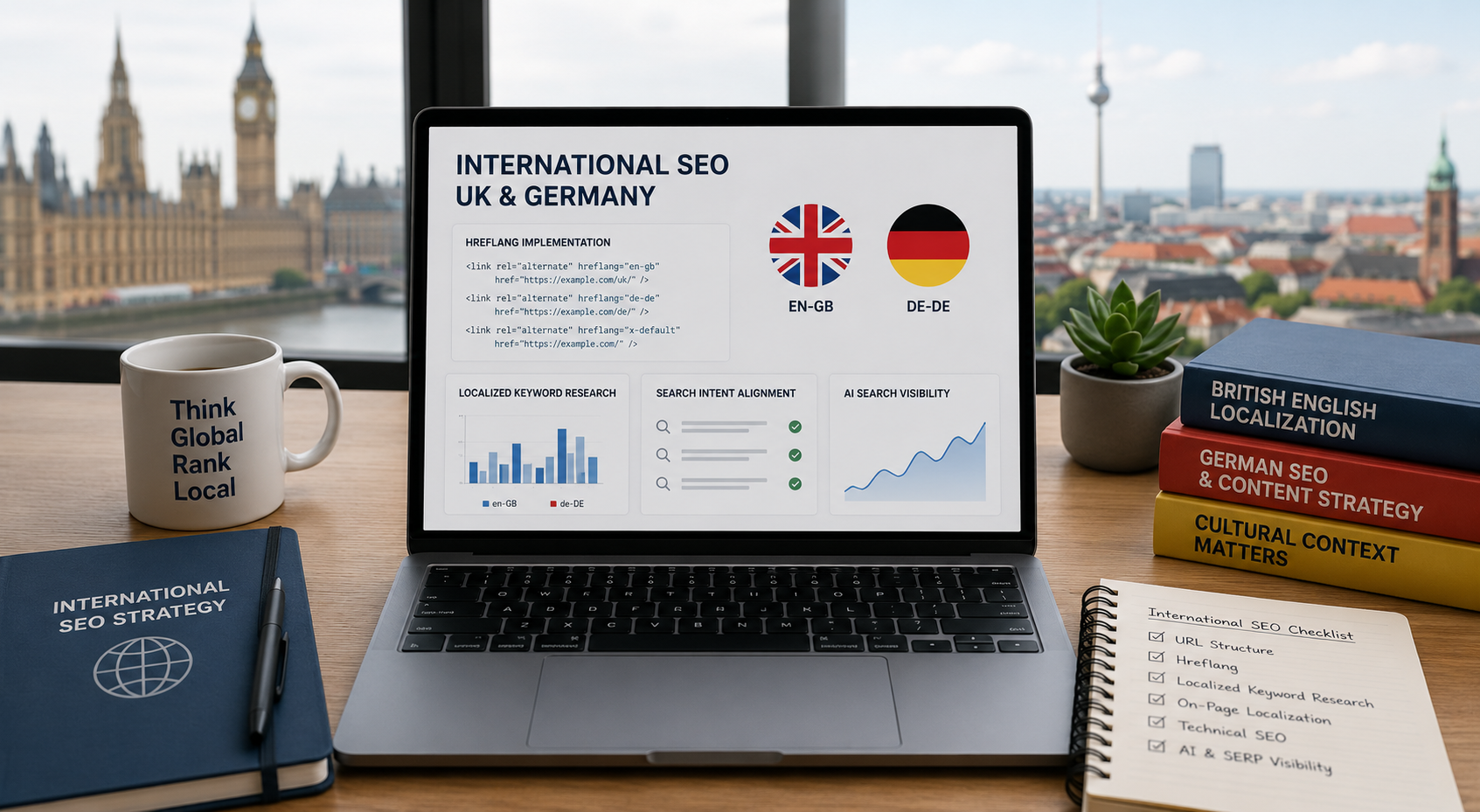
Expanding Into the UK and Germany? Here's Everything You Need to Know About International SEO Before You Launch.
Expanding into the UK and Germany isn't a translation project — it's a market entry strategy with deep technical, linguistic, and cultural dimensions. In this post we cover everything brands need to build real organic visibility in both markets: how to choose the right URL structure, how to implement hreflang without the errors that sink 75% of international sites, why localized keyword research means starting from scratch in each market, and what AI search visibility looks like when your buyers are searching in British English and German. If you're serious about international expansion, this is where to start.
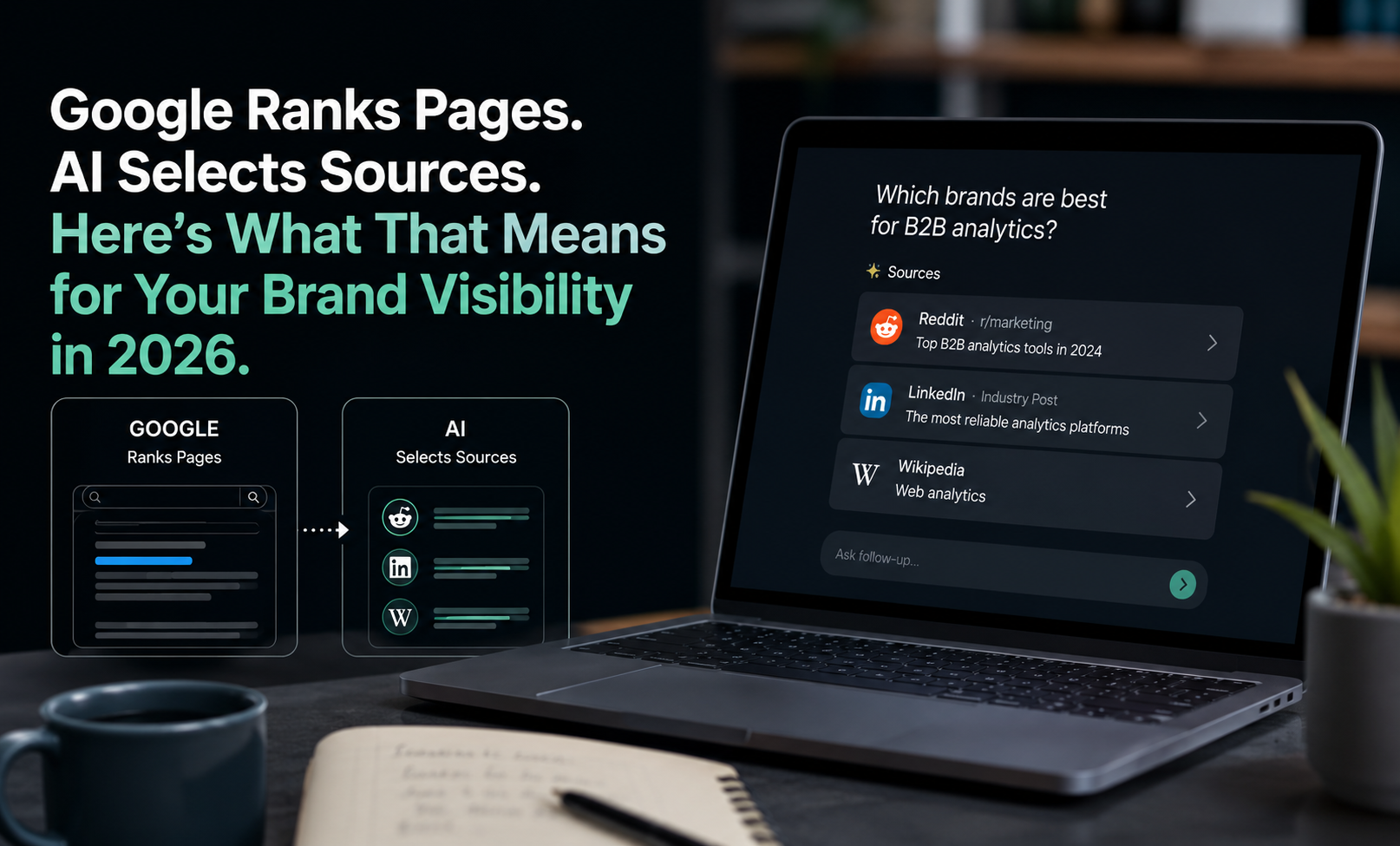
Google Still Ranks Pages. AI Doesn't. Here's Why That Distinction Is Rewriting Every Marketing Strategy.
Google still ranks pages. AI doesn't — it selects sources. That single distinction is reshaping how brands earn visibility, and most marketing teams haven't caught up yet. In this post we break down exactly how AI search selects the brands it cites, why ecosystem trust across Reddit, LinkedIn, and third-party platforms now matters as much as your organic rankings, and what a practical strategy looks like for building visibility across both layers of modern search.
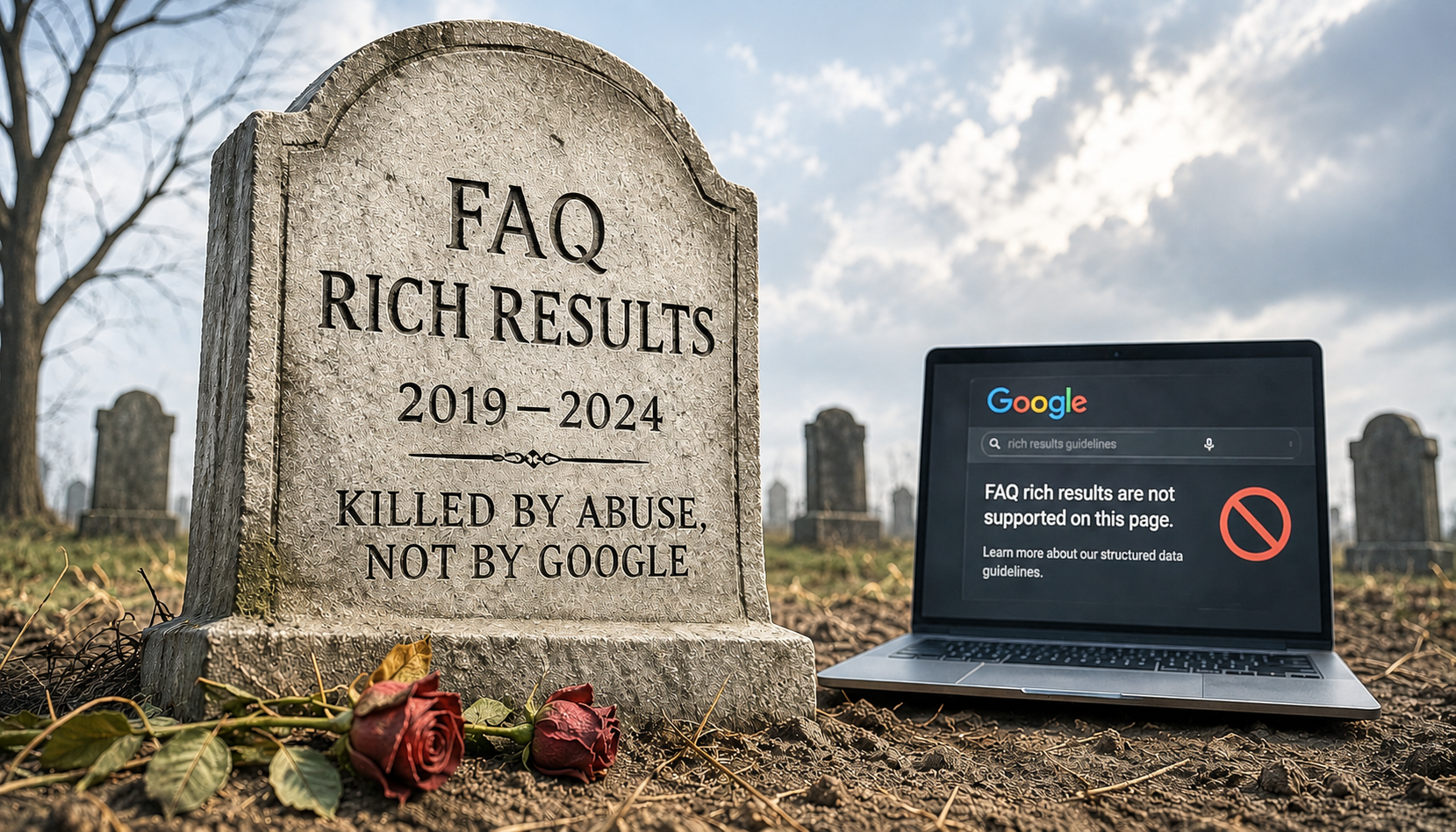
Google Didn't Kill FAQs. It Killed the Abuse of Them. Here's What's Actually Going On.
There's a post making the rounds in SEO circles with a headline that reads like an obituary: "BREAKING: Google just KILLED FAQ rich results." Cue the panic, the hot takes, and the comment section brawl. Here's the thing — both sides are wrong. Google didn't kill FAQs. It killed the abuse of them. Here's what actually happened, why it's been coming since 2023, and what it means for your website.