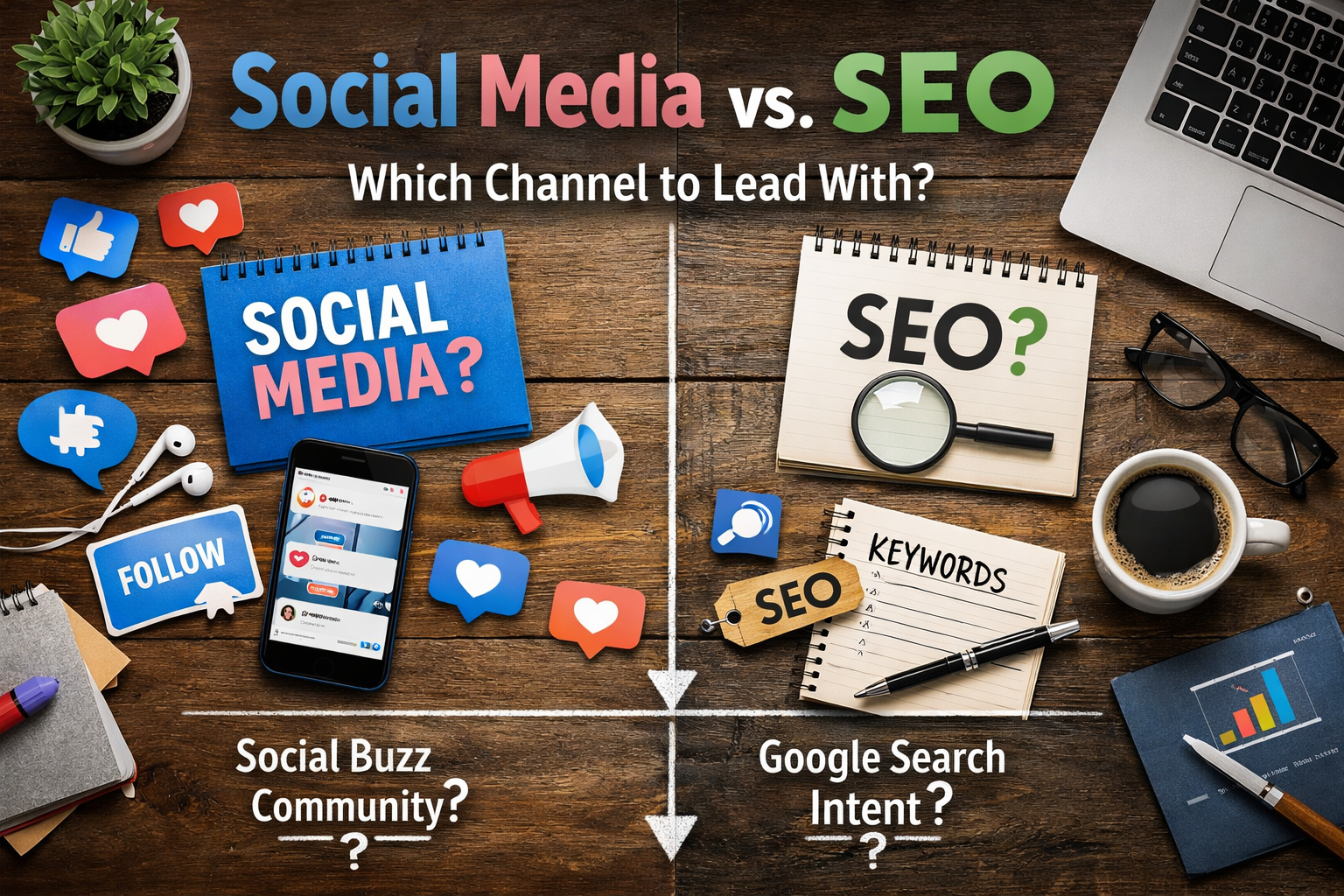
Social Media vs. SEO: How We Decide Which Channel to Lead With
Social media or SEO — it's one of the most common strategic questions we hear from businesses trying to figure out where to invest their digital marketing budget. The honest answer is that there's no universal right answer, but there is a clear framework for thinking it through. It starts with one question: when your ideal customer realizes they need what you offer, what do they do next? If they Google it, SEO leads. If they ask their community or discover it on a feed, social media leads. In this post we break down exactly how we make that call for different types of clients — and what getting it wrong actually costs.

The Main Line vs. South Philly Client: Same Product, Totally Different Buyer Journey
Two prospective clients. One in Villanova, one in South Philadelphia. Same service, same price, same outcome they're looking for. And yet everything about how they find you, how they evaluate you, and what they need to feel confident enough to hire you is completely different. Philadelphia is one of the most neighborhood-centric markets in the country — and geography here carries real cultural meaning that shapes buyer behavior in ways most businesses never account for. In this post, we map the distinct buyer journeys of the Main Line and South Philly client, break down what actually builds trust in each market, and lay out what a locally intelligent marketing strategy actually looks like in practice.
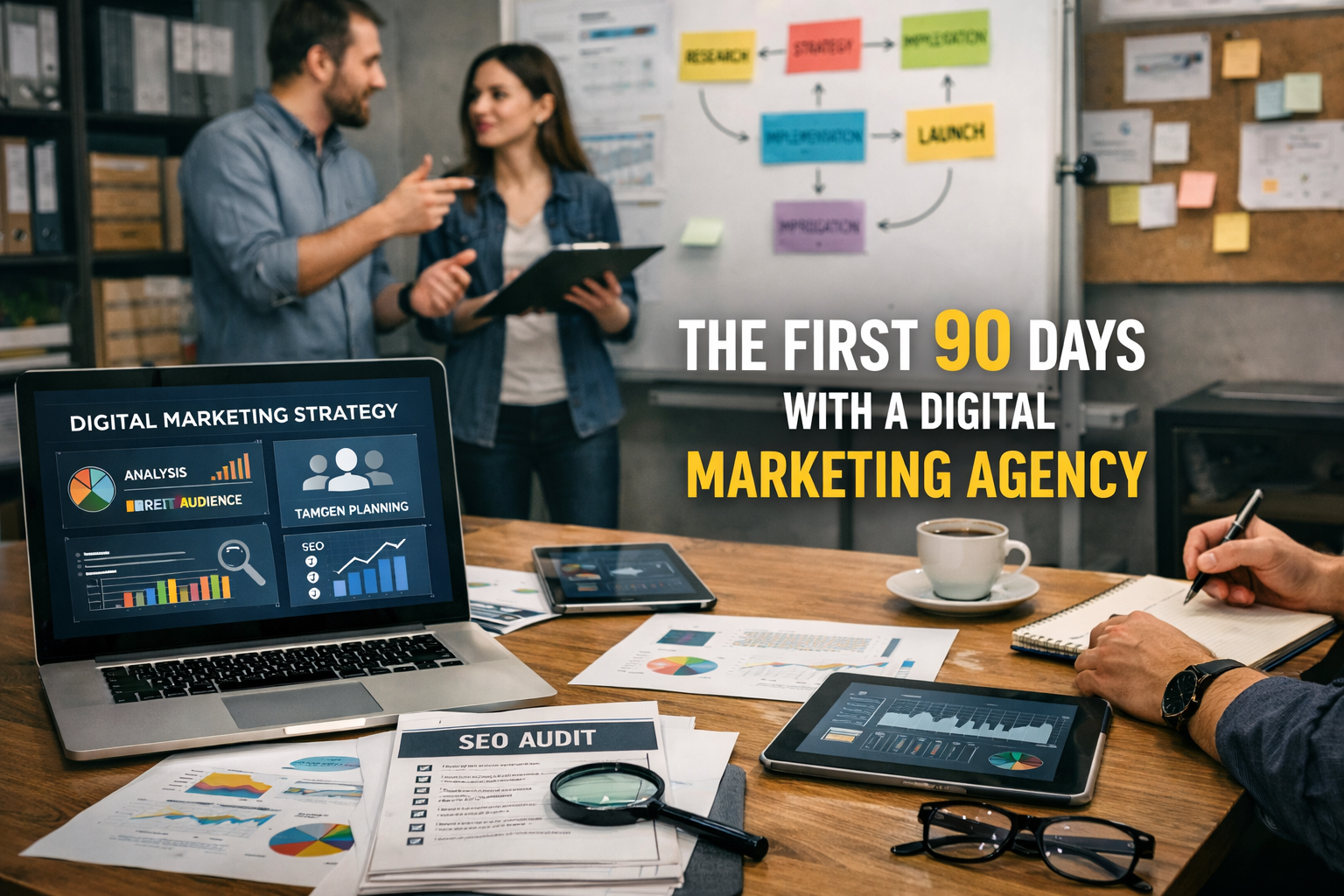
What to Expect in Your First 90 Days With a Digital Marketing Agency
Most businesses walk into a new agency relationship expecting to see results fast. The reality is that the first 90 days are rarely about visible wins — they're about strategy, foundation, and the behind-the-scenes work that determines whether everything that follows actually performs. That's not a bad thing. It's how good marketing works. But knowing what to expect, what to ask for, and what red flags to watch for makes the difference between a partnership that compounds into real growth and one that quietly fails before it ever had a chance. Here's the honest guide to what the first 90 days really look like.

Powersports Buyers vs. Car Buyers: How the Digital Journey Is Different
If you've ever tried applying an automotive digital marketing playbook to a powersports dealership, you already know something doesn't fit. The buyers behave differently, the timeline is longer and more emotional, and the research process looks nothing like car shopping. Powersports is its own world — and the dealers that treat it like a subset of the car business consistently leave money on the table. In this post, we break down exactly how the powersports digital buyer journey differs from automotive, and what dealers need to do differently to meet their buyers where they actually are.

Should You Write Off-Topic Blog Posts to Drive Traffic? The Honest Answer Is More Complicated Than You Think.
The idea that off-topic blog posts drive traffic and therefore leads sounds reasonable until you look at what that traffic actually converts at. More clicks from people who will never buy from you isn't a marketing win — it's noise. Here's the strategic framework for deciding when adjacent content makes sense and when staying in your lane produces better results.
How Much Does SEO Software Actually Cost? A Straight Answer With Real Numbers.
SEO software pricing pages are designed to make a simple question feel complicated. This blog skips the confusion and gives you real numbers — what Semrush, Ahrefs, and Moz actually cost, what you get at each price tier, the hidden costs most buyers don't account for, and the honest framework for deciding whether software or an agency is the better investment for your situation.

The Christian School Marketing Agency South Jersey Schools Actually Need
Most Christian schools in South Jersey don't have a marketing department — they have dedicated people filling the gaps with whatever time they have. The schools growing enrollment in 2026 are the ones that have built a real marketing program around how South Jersey families actually search for and choose a Christian school. Here's what that program looks like and what it costs.

The Best GEO Agency in New York? Here's What to Actually Look For.
GEO — Generative Engine Optimization — is the practice of ensuring your business surfaces in AI-generated responses from ChatGPT, Google's AI Overviews, and Perplexity. In a market as competitive as New York, the businesses building GEO visibility now are establishing a presence in the discovery layer that competitors will struggle to displace later. Here's what a real GEO program looks like and what to ask any agency before hiring them.
The Chiropractic Keywords You Should Actually Be Trying to Rank For
Most chiropractic practices build their SEO around two or three broad keywords and wonder why they're not ranking. The practices winning organic search are targeting hundreds of specific terms across six keyword categories — local, condition-based, service, insurance, question, and comparison keywords. Here's the complete list with real examples and the strategy behind each category.

A Country Club Membership and an Association Membership Aren't the Same Thing. One Is Much Easier to Market.
A country club membership and an association membership both cost money and promise community. But one markets itself through physical presence and direct experience while the other has to fight for visibility through digital channels and periodic events. Here's an honest breakdown of why one model wins on marketing — and what associations can do about it.

The Philadelphia Flower Show Is Nearly 200 Years Old. Here's What It Can Teach Every Brand About Marketing.
Most events don't survive a decade. The Philadelphia Flower Show has been running since 1829 — surviving wars, the Great Depression, and a global pandemic — and draws 250,000 people a year without relying on any single campaign or viral moment. Here's the marketing case study hiding inside one of America's oldest cultural institutions, and what every brand can learn from it.

You've Outgrown Your Wix Site. Here's What Comes Next.
There's nothing wrong with starting on Wix. The problem is staying there after you've outgrown it. If your organic traffic has flatlined, you're invisible on Google for searches that should be yours, and you're quietly embarrassed to send prospects to your website — you haven't hit a marketing problem. You've hit a ceiling. Here's what comes next.

What Should You Actually Expect From a Construction Marketing Retainer?
Construction marketing retainers aren't all created equal — and most construction company owners don't find out until they've spent six months paying for a generic digital package that doesn't understand their buyers, their sales cycle, or their industry. Here's a complete breakdown of what a construction marketing retainer should include, what it should cost, and when you should realistically expect results.

Digital Marketing in 2026 Looks Nothing Like 2016. Here's What Actually Changed.
The digital marketing playbook that worked in 2016 is functionally dead in 2026. Organic social reach collapsed. SEO got harder and AI search added a new discovery layer. Paid media costs tripled in competitive categories. Privacy changes broke attribution. And average content became invisible. Here's a blunt, channel-by-channel accounting of what actually changed — and what mid-market brands need to do about it.

How Much Do Full-Funnel Marketing Retainers Actually Cost for Mid-Market Brands? Here Are Real Numbers.
Most blogs about marketing retainer costs spend eight paragraphs saying "it depends" and never give you a number. This one does. Here are real full-funnel retainer ranges for mid-market brands — $5,000 to $60,000 per month depending on scope — with honest context on what's driving those numbers, what ad spend looks like on top, and what separates a retainer that produces results from one that just produces invoices.
Does Your Search Ranking Actually Matter for Getting Cited by AI?
AI tools like ChatGPT, Perplexity, and Claude don't cite ten sources per response — they cite two to seven. That's a far more competitive visibility environment than page one of Google, and the sites winning those citations aren't winning by accident. Here's what actually determines whether an AI retrieval system pulls your content, why traditional search rankings still matter in an AI-driven landscape, and what your content strategy needs to account for if citation visibility is something your business can't afford to ignore.
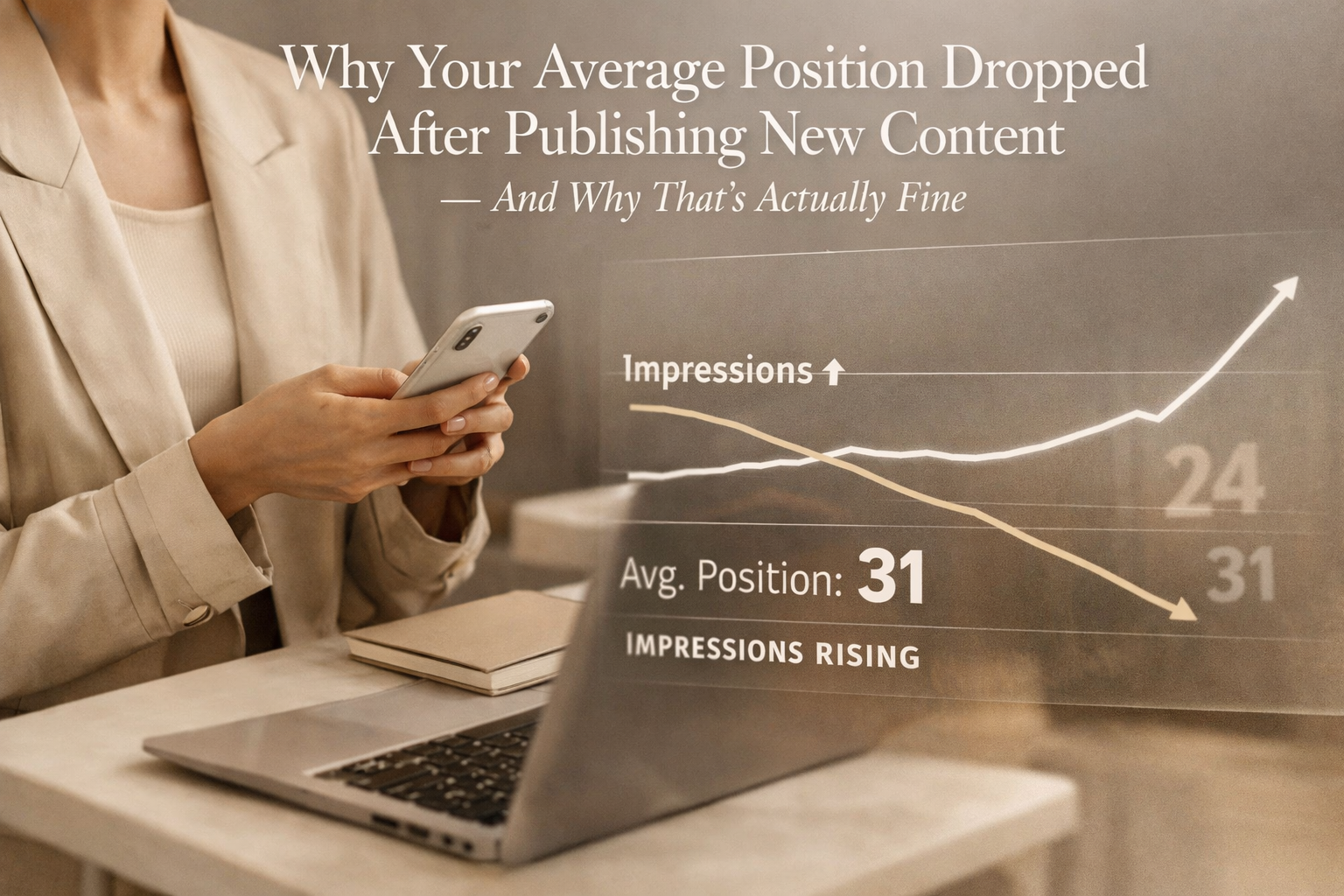
Why a Dropping Average Position in Google Search Console Isn't Always Bad News
You batch published a handful of new pages, Google found them fast, and then you opened Search Console and the average position number went the wrong direction. It was 24 last month. Now it's 31. So what went wrong? Most likely nothing — and once you understand what average position actually measures and why rising impressions with a dropping average position is the signature of an expanding SEO program, you'll never misread this data pattern again.

This Is Who You're Asking to Run Your Business
This is who you're asking to reconcile your billing. This is who you're asking to manage your entire ad spend. This is who you're asking to found a company. One childhood photo. One sentence. It's the simplest post your business will make all year — and probably the most effective. Here's the trend, why it works, and how to execute it.
SEO in Bucks County: Why the Businesses Winning Local Search Here Are Playing a Different Game Than Everyone Else
Bucks County isn't one search market — it's dozens of them. The way someone in Doylestown searches is different from how someone in Quakertown searches, and the competitive landscape in Newtown is nothing like the wide-open opportunity in upper Bucks. Here's what real local SEO in Bucks County looks like — and why the businesses winning local search here are playing a fundamentally different game than everyone else.
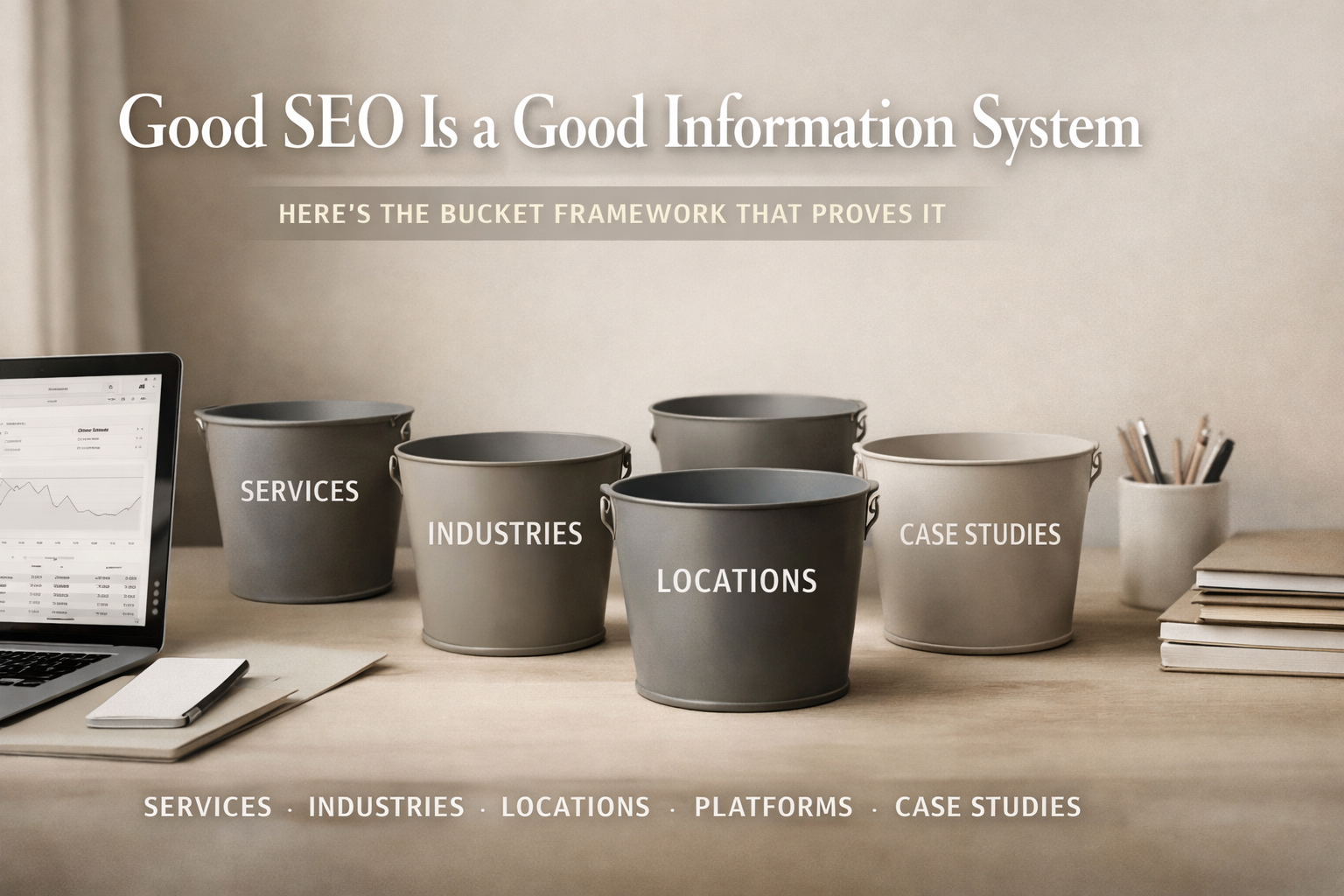
Good SEO Is Really Just a Good Information System. Here's What That Means for Your Business.
Stop thinking about SEO as a ranking game. Start thinking about it as an information system — one built from buckets across your services, industries, locations, platforms, and case studies — designed to meet prospective clients wherever they're searching from and tell you which bucket is actually driving leads. Here's the framework that makes that possible.